How to play
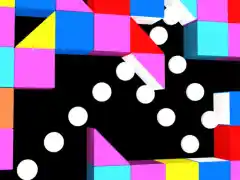
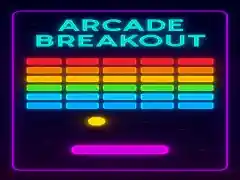
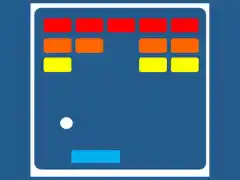
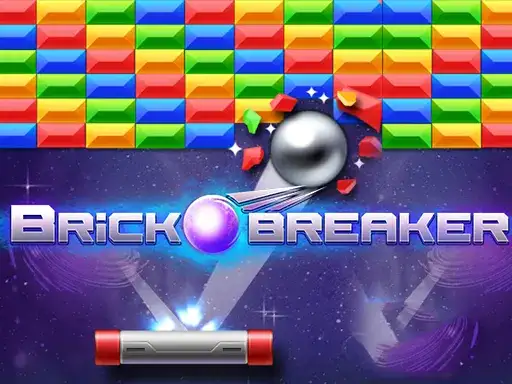
Brick Breaker is a brick-clearing arcade game. A ball travels around the play area, bounces off the walls and off the paddle you control, and knocks out bricks when it touches them. Your job is to clear the bricks and keep the ball from falling past your paddle. The control is simple, you hold the paddle and move it left and right, and the ball does the rest of the work. The developer states that the game also sets missions to complete, so each session comes with a task on top of the bricks themselves.
The ball moves on its own once play starts. You do not aim it. Everything you do happens at the bottom of the screen, where the paddle sits. Angle matters, because the point where the ball strikes the paddle decides where it goes next, so a small shift of your hand can send the ball into a different part of the wall. Read the ball, move early, and keep the paddle under it.
The first bricks usually fall quickly, because the ball starts in a predictable rhythm and the paddle has plenty of room to meet it. That changes as the wall thins out. Fewer bricks mean fewer places for the ball to bounce, and the ball spends more time travelling through open space, which leaves you less time to react.
Controls
On a desktop or laptop you move the paddle with the mouse. On a phone or tablet you slide your finger across the screen. Both methods work the same way, the paddle follows your pointer, so the position of your hand sets the position of the paddle, and there is nothing to press. That single rule covers the whole control scheme, which is part of why the game is easy to pick up in a spare minute.
Keep your movements small. The paddle only needs to travel as far as the ball does, and long sweeps across the screen are harder to correct than short ones. On a phone, rest your finger near the middle of the screen and slide it, keeping contact with the glass. Lifting your finger and touching down again can leave the paddle behind the ball for a moment, and that moment is often enough to lose the ball. On desktop, keep the mouse on the pad and let your wrist do the work.
Levels and power-ups
The developer states that the game is built around missions. You are given a task to finish, and the task shapes how you play the wall in front of you. Missions sit alongside the simple control as the two things worth knowing before you start. Read the task before you start.
Brick breaker games in general often add power-ups, a catch that widens the paddle, a ball that splits into several, a shot the paddle can fire, or a slow-down that buys you time. Those are common features of the genre, and the same is true of stage structure. Many brick breakers move you from one wall of bricks to the next, with the layout changing and the ball getting quicker as you go. Treat any of that as something to discover as you play.
Tips and strategy
Watch the ball. New players tend to stare at the paddle and react late, but the ball tells you where the paddle needs to be, and reading its angle early gives you time to move without rushing. The common mistake is chasing the ball across the screen, which turns a simple return into a scramble and often ends with the ball slipping past the edge.
Aim with the edges of the paddle. Hitting the ball with the outer part sends it away at a sharper angle, while the middle sends it back almost straight. If you want to reach a brick near the side wall, meet the ball with the edge on that side. If you want to slow things down and reset your position, use the flat middle and let the ball come back to you.
Open a path upward. Bricks near the top are the hardest to reach, and the fastest way there is to open a channel and then send the ball into it. Once the ball is above the wall, it can bounce between the ceiling and the bricks for a while, and that is when most of the damage happens. Think about that before you knock out the last bricks in a row.
Leave yourself room. Missions change what counts as progress, so read the task before you smash the wall. Every brick you remove changes the angles the ball can take, and a wall with a few bricks left is easier to control than an empty screen where the ball runs long and fast.
Keep the paddle near the middle when you can. The centre of the screen gives you the shortest distance to either side, so you can reach a ball heading for a corner in time. Drifting to one edge leaves half the play area out of reach, and a fast ball will find that gap.
About this kind of game
Brick breaker is one of the oldest shapes in video games. A paddle, a ball, and a wall of bricks is enough to make a game, and the format has lasted because the rules take seconds to learn while the angles take far longer to master. The ball never behaves randomly in a well-made version, so every miss can be traced back to a decision you made a moment earlier.
That is the appeal. There is no story to follow and no inventory to manage. You look at the wall, you look at the ball, and you move. The challenge comes from speed and from the way the wall changes as you break it, and the rules stay simple throughout.
The genre rewards patience more than reflexes. A player who keeps the paddle calm and lets the ball come back will usually outlast a player who lunges at every bounce. As the ball speeds up, that difference matters more, because there is less time to correct a bad position. Short sessions work well here. Play a few minutes, stop when your attention drops, and come back later.
The format has appeared on arcade cabinets, home consoles, and phones, and the core idea has survived every change of hardware because it needs so little. A screen, a ball, and something to break is a complete game.
Where and how to play
You can play Brick Breaker right here in the browser. Nothing needs to be installed, there is no account to create, and there is no sign-in step to sit through. The game runs on desktop and on mobile, so the same link works on a laptop, a tablet, or a phone, and it loads only after you press Play. Until you do, the page stays light.
The game is served through a player provided by GameMonetize. Any advertising that appears around the game comes from that player and keeps the game free to open. If you see an ad before play begins, that is where it comes from.
On a phone, hold the device in whatever orientation feels comfortable and slide your finger along the bottom of the screen. On a desktop, a mouse is enough. Nothing else is needed.
FAQ
Is Brick Breaker free to play? Yes. It runs free in the browser, with no download and no account.
Can I play it on my phone? Yes. Slide your finger across the screen to move the paddle. On a desktop, use the mouse.
Do I need to install anything? No install is needed. The game loads in the page after you press Play.
What is the goal? The goal is to clear the bricks and keep the ball from falling past the paddle, and the developer states that the game also sets missions that give each session a task as well as the bricks.
How do I move the paddle? Hold and slide with the mouse on desktop, or slide your finger on a phone.