How to play
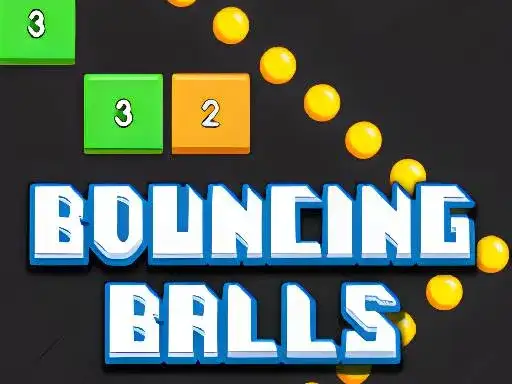
Bouncing Balls is a brick breaker that runs in a browser tab. The developer states that the aim is to crush as many bricks as possible before they fall to the ground, and that every brick carries a number on its face. A brick disappears only after it has been hit as many times as the number printed on it, so a brick marked with a high number takes several hits while a low one clears quickly. The board does not wait for you. Bricks move down toward the bottom of the screen, and the developer frames the run as a race against that descent. That single pressure shapes every decision you make.
Your ball does the work. You throw it, it bounces off walls and bricks, and each contact removes one hit from whatever it touches. Because the ball keeps travelling after the first impact, a well judged throw can strike several bricks before it comes back. Reading the angle before you release matters more than throwing quickly.
The developer describes the game as simple and minimal, with nothing to pick up and no complicated setup. Runs are short by design, which makes it easy to try one more attempt after a bad throw.
Controls
The developer lists a swipe as the control. You drag your finger across the screen to set the direction of the throw, and the same description also mentions tapping to aim and shooting the ball. Both gestures do the same job, they tell the game where the ball should go. On a computer, the pointer stands in for the finger, which is how browser games of this type usually handle input.
There is nothing else to learn. No buttons to memorise, no menus to open mid-run, no inventory to manage. The whole interaction is a direction and a release.
If a throw goes wrong, you cannot call the ball back. You wait for the next one and adjust.
Levels and power-ups
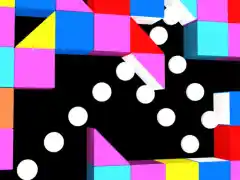
The developer does not describe separate stages, numbered levels, or named power-ups. What the description does mention is one pickup, gold circles that appear somewhere on the board and hand you additional balls when you collect them. Gathering them builds what the developer calls an endless ball chain, so more balls end up in play at the same time.
More balls in play means more contacts per throw. It also means less control over where each one goes, since every extra ball adds its own bounce path to the board. The trade is usually worth taking, because a crowded board clears faster than a tidy one.
Nothing else is described as a reward. There is no shop, no upgrade screen, and no currency mentioned in the developer’s description, so the gold circles are the only thing to chase beyond the bricks themselves.
Tips and strategy
Start with the bricks that carry the highest numbers. A brick with a large number needs many hits, and if you leave it until the board is crowded you will struggle to reach it cleanly. Chip away at the tough ones early, while you still have clear lines to them.
Think about the walls as part of your shot. A ball that travels up one side and comes down the other covers more of the board than a straight vertical throw. Angles that cross the board diagonally tend to touch more bricks per throw.
Clear from the bottom when you can. Bricks near the bottom are closest to ending your run, so removing them buys time for everything above. This is standard practice in descending brick games, and it holds here too.
Do not chase a single brick with every throw. If one stubborn brick sits behind a wall of others, work on the neighbours first and let the ball reach it on a later bounce. Space on the board is a resource, and a crowded board is harder to read.
Collect the gold circles when they are within reach. Extra balls multiply the effect of a good angle, and a chain of balls can clear a whole band of bricks in one throw. Missing them costs you the easiest advantage the game offers.
Aim with the whole board in mind. The nearest brick is rarely the best target, because the ball keeps moving after it hits. Where it lands first and where it goes next both matter, and that is the planning part of a game that looks like pure reflex.
About this kind of game
Bouncing Balls belongs to the brick breaker family, the arcade line that grew out of paddle and ball games and later traded the paddle for a direct throw. In most modern versions you do not control a bat at the bottom of the screen. You aim, you release, and the ball does the rest.
The number on each brick is a durability counter, a common device in this genre. It turns a simple target into a small decision, hit the easy brick now or spend a throw on the hard one. Games that use numbers this way tend to reward patience over speed.
Descending bricks add a clock without a timer. There is no countdown on screen. The pressure comes from the board itself, and it grows as the bricks get closer to the bottom edge. That design keeps runs short and makes each throw feel like it matters.
Physics does the rest. Bounce angles, wall contacts, and the order in which the bricks disappear all interact with each other, which is why two throws that look similar can end very differently. Players who enjoy planning a shot ahead usually get more out of this style than players who fire as fast as possible.
Where and how to play
Bouncing Balls runs free in your browser on desktop and mobile, and there is no download to install and no account to create before you begin playing. The game loads after you press Play, which means nothing runs in the background before you decide to start.
Any ads you see come from the provider’s player. They are part of how the game is delivered. The game itself is the same whether you play on a phone, a tablet, or a computer.
Browser games of this kind usually keep a run in the tab rather than in a saved profile, so a fresh session normally starts from a clean board. That is normal for the format, and it keeps the whole thing simple.
FAQ
Do I need to download anything? No. The game runs in the browser on desktop and mobile, with no download and no account.
Is it free to play? Yes. There is no charge to play, and no sign-in is required.
What do the numbers on the bricks mean? Each number is the count of hits that brick needs before it disappears. A brick marked with a larger number takes more hits.
What happens when bricks reach the bottom? The developer states that the run is about crushing bricks before they fall to the ground, so bricks reaching the bottom is the end condition you are playing against.
How do I get more balls? Collect the gold circles that appear on the board. The developer states that these give you additional balls and build an endless ball chain.
Does it work on a phone? Yes. The control is a swipe, which suits a touch screen, and the game also runs on desktop browsers.
Are there levels to unlock? The developer does not describe separate stages or unlockable levels. The description focuses on the board in front of you and the bricks on it.