How to play
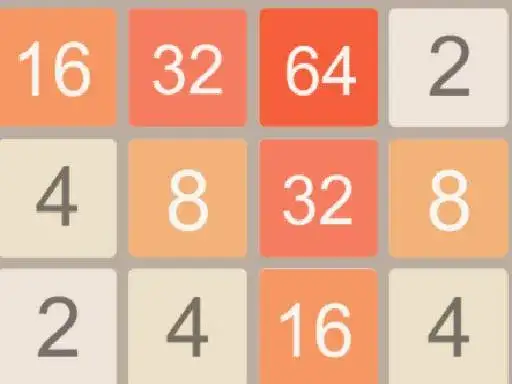
The developer states that this game merges numbers to make a bigger number. That is the complete idea presented for this title. In merge puzzles generally, matching values combine into larger values, giving each move a clear immediate purpose while leaving the longer plan open. A successful merge can create space and increase the value of one tile, so consider how a move affects the rest of the board after the immediate combination.
Sliding tile puzzles usually ask you to choose a direction and move several tiles together. In this genre, tiles may continue across open spaces until an edge or another tile stops them, while matching values can combine according to the rules of the particular game. Watch how the whole arrangement changes after each input, because a move that creates one useful combination can also leave awkward gaps or block future combinations.
A common rule in this genre allows each tile to combine once during a single move. Under that rule, a line containing four matching values produces two combined tiles when processed in pairs. The exact behaviour belongs to the individual game, so observe the result of each move and use the visible board as your guide. The central activity remains straightforward. Choose a direction, look at the new arrangement, and decide how to preserve useful space for the next move.
Early moves in a merge puzzle often feel easy because small values can be combined with little preparation. Later decisions usually require more care, since available space becomes more important and a poor direction can disrupt several planned combinations. A patient pace helps you inspect the board before committing to an input. The aim is to make progress while keeping enough flexibility for the next few moves.
Controls
The developer states that the mouse is used to play the game. For sliding-tile puzzles generally, the practical input is a directional choice that changes how the board rearranges. Check the arrangement before making an input, then observe the result and adjust your next choice according to the movement rules shown by the puzzle.
On a touchscreen device, similar genre puzzles may accept a finger gesture as directional input. The useful habit is the same across supported devices. Check the arrangement, choose the direction that best fits your plan, and make one deliberate input. A slow decision gives you more time to notice a blocked lane, an exposed high-value tile, or an empty square that you want to preserve.
Levels and power-ups
The developer states that this is a puzzle game about merging numbers into bigger numbers, and states nothing beyond that. There is no mention of level packs, timers, star ratings, or power-ups that clear the board or change a tile. Focus on the arrangement in front of you and judge progress through the combinations and space that remain available.
In this kind of puzzle, improvement usually comes from making better choices on the same basic board. You can compare the value of your best tile, the amount of space you preserved, or the point at which a run ended. Those measures make practice useful even when the rules remain unchanged. Before starting, remember that the available information is the visible board and the result of your last move, so careful observation is more useful than searching for a hidden progression system.
Tips and strategy
Pick one corner and keep your biggest tile in it. That habit can provide a fixed anchor and a clear direction for smaller tiles to feed into. Build a chain along one edge, with the largest value in the corner, the next largest beside it, and smaller values continuing along the line. A slide in the suitable direction can then bring related values together while keeping the main structure easy to read.
Keep the board as empty as you can. Open space is the resource you manage, because it gives you more possible directions and more chances to set up a useful combination. Before moving, picture how the arrangement will look afterward. If a direction fills an important opening or breaks your chain, consider an alternative that changes less of the board.
Genre puzzles of this type may place new tiles in available spaces after a move, which makes plans based on one precise location fragile. Leave room for an unexpected addition and avoid relying on a single sequence of moves. A short pause before each input can prevent a rushed decision from closing a lane that you still need.
Avoid sending your largest tile away from its chosen corner. Once a high-value tile drifts toward the middle, the surrounding arrangement can become harder to organise, and restoring the anchor may require several careful moves. Feeding smaller values toward the corner helps maintain the chain and leaves more room to handle an inconvenient addition.
When only a few squares remain open, focus on order and available space. A tidy line of descending values can create a useful combination in one move, while a scattered line may require several adjustments. Keep the board readable, protect the lanes that support your largest tile, and consider the next arrangement before you commit.
A short checklist to run before you commit to a direction
- Does this slide pull the largest tile out of its corner?
- Will this fill an opening that supports the row or column I depend on?
- Does the move keep my chain of descending values intact?
- Can I combine smaller tiles without pushing a larger one into awkward space?
- Is there a direction that changes less and preserves more room for the next move?
About this kind of game
Merge puzzles belong to the sliding tile family. They are easy to describe and can demand careful planning once the board becomes crowded. Their appeal comes from the contrast between a small set of inputs and many possible arrangements. Each direction changes the visible position of several tiles, so a simple choice can affect combinations, open spaces, and the shape of the next decision.
The format rewards attention to consequences. A careless direction can interrupt a useful chain, while an unplanned addition can make an earlier arrangement harder to maintain. Good play involves accepting that the board may change in inconvenient ways and keeping more than one option available. Protect empty squares, avoid committing every tile to one exact sequence, and treat each move as part of a continuing arrangement.
The developer’s description keeps the focus on merging numbers. Players who enjoy this type of puzzle can use repeated attempts to compare choices and refine their habits. When a run ends, look back at the move that reduced your options, the lane that became blocked, or the point where the largest tile left its anchor. That review gives a practical way to improve without adding extra rules to the experience.
Where and how to play
This page is where the game lives. Press Play and the board loads in your browser on a desktop or mobile device, with no download and no account to create. Nothing is stored on your device before that point. Any ads in the play area come from the player supplied by the provider, GameMonetize, rather than from us. That is the usual arrangement for embedded browser games, and it is why the play area sometimes shows something before the game itself.
Because the game runs in the browser, you can use a laptop, desktop, tablet, or phone. There is nothing to update and no version to match. The browser provides the access point, while the board supplies the puzzle activity described for the page.
FAQ
Is 2048 free to play? Yes. The game runs in your browser at no cost, and there is nothing to buy before you start.
Do I need to download anything or create an account? No. The game loads after you press Play, and no account is required at any point.
Does it work on a phone? Yes. It runs in the browser on desktop and mobile devices.
Why do I see ads? Any ads in the play area come from the player supplied by the provider, GameMonetize, rather than from us.
How do I control the board? The developer states that the mouse is used to play the game. In this genre, make a directional choice and watch how the board responds.
How does a round end? In this kind of game, a round can end when no tile can move in any direction and no legal move remains.
What should I aim for? Keep your largest tile in one corner, keep empty squares free, and merge in an order that preserves your chain.